Introduction
Selling a business ranks among the most complex financial transactions most owners will ever undertake. Many struggle with knowing where to start, what documents to prepare, and how to avoid costly mistakes that can reduce their sale price by hundreds of thousands of dollars—or cause deals to fall apart entirely. Research shows that 70-80% of privately held businesses listed for sale fail to close within 12 months, often due to poor preparation, unrealistic pricing, or disorganized documentation.
This guide walks through a complete selling-a-business checklist, from pre-sale preparation to post-sale handover. Whether you're years away from an exit or actively preparing now, a structured approach is what separates deals that close at full value from the ones that don't. The sections below give you a clear roadmap of what to do, when to do it, and who you need in your corner.
Key Takeaways
- Selling a business follows five key phases: readiness assessment, preparation, valuation, closing the sale, and post-sale transition
- Financial and legal preparation directly influences your final sale price and deal success
- Getting a professional business valuation before going to market sets a realistic price and exposes gaps to fix
- Confidentiality must be actively managed throughout the process to protect relationships with staff, suppliers, and customers
- Starting 2-3 years before your planned exit gives you the most leverage to increase business value and attract qualified buyers
Why a Selling-a-Business Checklist Is Essential
Without a structured checklist, critical steps are easily missed—causing deal delays, lower valuations, or even failed transactions. 26% of deals fall apart due to valuation gaps between buyer and seller expectations, while over 46% of broken Letters of Intent result from due diligence findings that could have been addressed earlier.
A checklist shifts you from reactive to proactive. It helps you:
- Identify weak spots before buyers do
- Organize documentation so nothing stalls due diligence
- Signal professionalism that directly raises buyer confidence and final price
Businesses with complete documentation receive 2.3x more offers and achieve 15-20% premium valuations compared to unprepared sellers.
The stakes are high. Many business owners experience seller's remorse post-sale because they didn't plan their exit carefully. A methodical checklist ensures deal-killing issues get fixed on your timeline—not when a buyer's attorney surfaces them in due diligence.
Step 1: Assess Your Readiness and Define Your Exit Goals
Before any preparation begins, honestly evaluate your personal and financial readiness to exit. Consider your retirement income needs, emotional attachment to the business, and what you plan to do post-sale. Many owners underestimate the psychological shift that comes with selling a business they've built over decades.
Define Your Exit Objectives Early
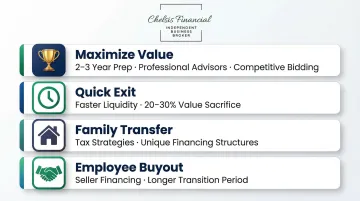
Is your goal to maximize sale price? Transfer to a family member or employee? Exit quickly due to health or personal reasons? Each objective leads to a different path with different financial outcomes:
- Maximize value: Requires 2-3 years of preparation, professional advisors, and competitive bidding
- Quick exit: May sacrifice 20-30% of potential value but provides faster liquidity
- Family transfer: Involves different tax strategies and financing structures
- Employee buyout: Often requires seller financing and longer transition periods
Once you've defined your objective, the next question is when — and external conditions matter as much as internal readiness.
Consider External Timing Factors
Industry trends, economic conditions, and business performance cycles all determine whether you're entering a buyer's or seller's market. Selling during a strong performance year in a growing industry yields better multiples than selling during a downturn. Key factors to watch:
- Industry consolidation trends (more buyers = higher prices)
- Interest rate environment (affects buyer financing costs)
- Your business's performance trajectory (3 years of growth is ideal)
- Economic outlook for your industry
Step 2: Prepare Your Business for Sale
Buyers pay for what they can verify. A well-prepared business is more valuable and more easily sold. This step covers three pillars of preparation: financials, legal, and operations.
Financial Preparation
Buyers will scrutinize three to five years of financial records. Ensure your profit and loss statements, balance sheets, cash flow statements, and tax returns are accurate, up to date, and clearly organized.
Normalizing (Recasting) Your Financials:
Most business financials are structured to minimize taxes — not to show buyer value. Recasting presents a true picture of ongoing profitability by removing:
- Owner-specific expenses (personal vehicles, family travel)
- One-time items (legal settlements, equipment purchases)
- Excess owner compensation above market rate
- Non-recurring costs
This process shows buyers the actual cash flow available to them, not just what your tax returns show after minimizing taxable income.
Legal and Compliance Preparation
With financials in order, turn to legal housekeeping. Undisclosed compliance issues discovered during due diligence are one of the most common reasons deals fall apart or result in price reductions. Take these steps:
- Resolve any outstanding legal disputes or litigation
- Ensure all business licenses and permits are current and transferable
- Confirm lease agreements can be assigned to a new owner
- Review and organize all contracts (customer, supplier, employee)
- Address any regulatory compliance gaps
Operational Preparation
Once your financials and legal records are solid, the final pillar is operations. Buyers want to acquire a business that runs independently of the owner. Manufacturing firms with heavy owner involvement trade at a 47% discount (4.0x vs 7.5x EBITDA) compared to professionally managed peers.
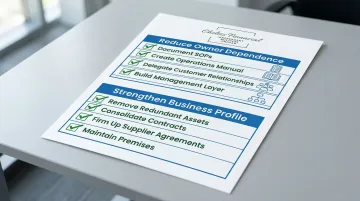
Reduce Owner Dependence:
- Document systems and standard operating procedures (SOPs)
- Create an operations manual covering daily tasks and processes
- Delegate key customer relationships to other team members
- Build a management layer that can operate without you
Beyond reducing owner dependence, a few operational details strengthen the business profile buyers see:
- Remove redundant assets that don't generate revenue
- Consolidate long-term customer contracts to demonstrate recurring revenue
- Firm up supplier agreements with favorable terms
- Keep physical premises clean and well-maintained — first impressions affect perceived value
Step 3: Value Your Business and Build Your Advisory Team
Getting a credible business valuation is the foundation of everything that follows—it informs your asking price, highlights gaps to close, and prevents under- or over-pricing.
Common Valuation Methods
EBITDA Multiples: Most common for businesses with $2M+ in earnings. Industry-specific multiples typically range from 3x to 8x EBITDA.
SDE Multiples: Used for smaller, owner-operated businesses. Seller's Discretionary Earnings multiples typically range from 2x to 3.5x.
Asset-Based: Values tangible assets minus liabilities. Often used for asset-heavy businesses or distressed situations.
Market Comparables: Based on recent sales of similar businesses in your industry and region.
Chelsis Financial offers a Complimentary Assessment of Value for business owners who want a clear picture of what their business is worth before committing to a sale. The assessment reviews your financial statements, market trends, industry benchmarks, and tangible assets to establish a credible, well-supported asking price.
Once you have a realistic value in hand, the next step is surrounding yourself with the right advisors.
Assemble Your Advisory Team
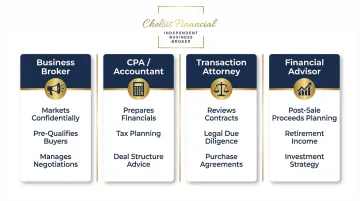
Most successful sales involve a team of four key advisors:
| Advisor | Role |
|---|---|
| Business Broker | Markets your business confidentially, pre-qualifies buyers, manages negotiations, leverages buyer networks |
| CPA/Accountant | Prepares financial statements, handles tax planning, advises on deal structure tax implications |
| Transaction Attorney | Reviews contracts, manages legal due diligence, protects your interests in purchase agreements |
| Financial Advisor | Plans for post-sale proceeds, retirement income, investment strategy |
What to Look for in a Business Broker
Choose a broker who dedicates their full practice to buying and selling businesses, not someone who dabbles in business sales as a secondary service. Key attributes include:
- Established, vetted buyer network across multiple industries
- Market insight and industry-specific valuation expertise
- Proven ability to maintain confidentiality throughout the process
- Track record of closed deals in your business size range
- Understanding of complex deal structures and negotiation strategies
Chelsis Financial maintains a buyer registry of 2,000+ pre-qualified companies across the Midwest. The firm's outreach process keeps your sale confidential while connecting you with serious, vetted buyers — without the public exposure that comes with listing your business on open platforms.
Confidentiality Planning
Decide what information to share, with whom, and when. Have Non-Disclosure Agreements (NDAs) ready before disclosing any business details to prospective buyers. Premature disclosure to employees, customers, or competitors can destabilize your business and reduce value before a deal closes.
Step 4: List, Market, Negotiate, and Close the Sale
Confidential Business Review (Sales Memorandum)
This document is what qualified buyers evaluate. It must include:
- Executive summary with investment thesis
- Financial overview (3-5 years of statements, normalized EBITDA)
- Description of operations, systems, and workforce
- Market position and competitive advantages
- Growth potential and expansion opportunities
- Reason for sale
Listing and Marketing the Business
Discreet, targeted marketing through a broker's buyer registry and direct outreach to strategic buyers often works better than broad public listings. Confidentiality concerns make broker-led marketing the preferred approach for most established businesses.
Chelsis Financial uses a network of pre-screened buyers to run targeted outreach campaigns — keeping your sale confidential while reaching buyers who are genuinely ready to act.
Evaluating and Negotiating Offers
Look beyond the headline price when evaluating offers:
- Payment structure: Lump sum vs. earnout vs. seller financing
- Buyer financing quality: Cash buyer vs. SBA loan vs. private equity
- Timeline: How quickly can the buyer close?
- Contingencies: What conditions must be met?
- Operational capability: Can the buyer sustain and grow the business?
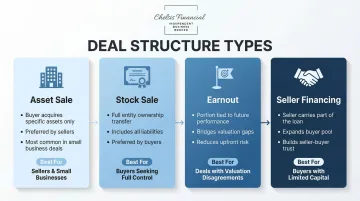
How an offer is structured affects your tax liability, risk exposure, and how much you actually walk away with. The most common deal structures in U.S. transactions include:
- Asset Sale: Buyer acquires specific assets and liabilities only — sellers generally prefer this for tax treatment; most common structure in small business deals
- Stock Sale: Buyer takes full ownership of the entity, including all existing liabilities — often preferred by buyers seeking operational continuity
- Earnout: A portion of the price is tied to future performance milestones — useful when buyer and seller disagree on value
- Seller Financing: Seller carries part of the loan, which can expand the buyer pool and signal confidence in the business
Beyond price and structure, negotiate post-sale involvement, non-compete scope, and transition timelines early — these terms directly affect your life after closing.
Due Diligence and Closing
Buyers will verify all financial, legal, and operational claims during due diligence. This phase typically lasts 3-4 months for Main Street businesses and can extend to 5.5 months for larger transactions.
Organized, pre-prepared documentation shortens this phase and keeps deals on track. Non-QoE diligence findings account for 25.3% of failed transactions post-LOI, while QoE EBITDA discrepancies cause 21.3% of failures.
Closing Phase:
- Final purchase agreement review and signing
- Transfer of assets and ownership
- Regulatory notifications and filings
- Legal advisors review all closing documents
- Funds transfer and escrow arrangements
Step 5: Post-Sale Transition and What Comes Next
Structured Transition Plan
Create a timeline with handover milestones:
- Introduction of buyer to key employees, clients, and vendors
- Knowledge transfer sessions covering operations, systems, and relationships
- Training period (typically 30-90 days)
- Gradual reduction of seller involvement
Post-Sale Financial Responsibilities
- Final tax reporting: Capital gains considerations, allocation of purchase price
- Settling outstanding liabilities: Loans, payables, obligations
- Proceeds deployment: Work with a financial advisor to plan investment strategy
Consult a CPA about tax implications of the transaction structure well before closing—not after. The difference between asset sale and stock sale treatment can significantly impact your net proceeds.
Personal Transition
Many business owners underestimate the psychological and lifestyle shift after selling. Going in without a plan for what follows often leads to feeling lost once the dust settles. Decide early what comes next:
- Starting a new venture or acquiring another business
- Transitioning into retirement with a clear financial plan
- Taking on consulting or advisory roles in your industry
- Pursuing personal goals that the business never left room for
The more intentional you are about this phase, the smoother the shift.
Common Mistakes Sellers Make
Waiting Too Long to Start Preparation
The most damaging mistake is beginning the process only when you're ready to leave. Sellers who start 2-3 years in advance have time to improve financials, resolve issues, and increase value. Last-minute sellers leave significant money on the table.
Overpricing Without a Formal Valuation
Unrealistic valuation expectations cause 35% of business sale failures. Sellers overvalue their businesses by 40-60% compared to actual market multiples. An unrealistic asking price drives away qualified buyers and causes listings to go stale.
Failing to Maintain Confidentiality
Premature disclosure to staff or customers creates instability before the deal closes. The fallout can move fast:
- Employees start looking for other jobs
- Customers explore alternative suppliers
- Competitors exploit the uncertainty to poach business
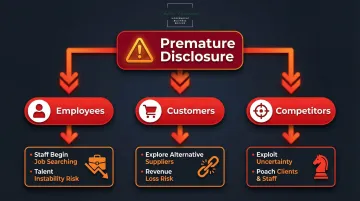
Use NDAs and controlled information disclosure throughout the process to keep the sale on your terms.
Attempting to Sell Without Professional Advisors
Confidentiality and pricing are hard to manage alone — which is why going it without advisors compounds every other mistake on this list. For Sale By Owner (FSBO) sellers either undervalue their business and close fast at a loss, or price too high and watch the listing go cold. Professional advisors improve both the odds of closing and the final sale price.
Frequently Asked Questions
What are the 5 P's of selling?
The 5 P's are Price, Preparation, Presentation, Process, and People. Price must be defensible; Preparation means clean financials and operations; Presentation covers how you market the business; Process is your structured approach from listing to close; and People refers to the advisory team guiding the transaction.
How long does it take to sell a business?
The timeline typically ranges from 6 months to 2 years depending on business size, industry, preparation level, and market conditions. Well-prepared businesses generally close faster. The median time to close a small business sale was 170 days in 2025, with 3-4 months spent in due diligence after an LOI is signed.
What documents do I need to sell my business?
You'll need financial records (3-5 years of P&Ls, tax returns, balance sheets), legal documents (licenses, contracts, leases), employee records (org chart, compensation, contracts), and operational documentation (SOPs, customer lists, supplier agreements). Organizing these before going to market significantly speeds up due diligence.
Do I need a business broker to sell my business?
While not legally required, a broker significantly improves outcomes by accessing qualified buyers, managing confidentiality, and navigating negotiations. The business sale success rate improves to 40-50% for companies with professional M&A advisors, compared to the overall 20-30% success rate. The broker's fee typically pays for itself for most sellers given the higher sale prices and closure rates they achieve.
How is the sale of a business taxed?
Proceeds are subject to capital gains tax — short-term or long-term based on ownership duration. Deal structure matters significantly: asset sales may result in higher taxes for sellers, while stock sales typically offer cleaner capital gains treatment. Consult a CPA before closing to optimize your tax position.
When should I start preparing to sell my business?
Begin preparing 2-3 years in advance to allow time to improve financials, resolve issues, reduce owner dependence, and maximize value. Deloitte advises that planning should commence two to three years before a founder intends to step back. However, a business broker like Chelsis Financial can help even if your timeline is shorter—though starting earlier always delivers better outcomes.
Ready to understand what your business is worth? Chelsis Financial offers a Complimentary Assessment of Value to help you establish a defensible asking price and identify opportunities to increase value before going to market. Contact them at 866-842-5151 or visit their website to schedule a confidential consultation.