
Introduction
Most business owners dedicate decades to building profitable companies, yet fewer than half have a documented exit plan. According to the Exit Planning Institute's 2023 National State of Owner Readiness Report, approximately 50% of all business exits are involuntary, triggered by death, disability, divorce, disagreement, or distress. Without advance planning, these forced exits often result in below-market outcomes and limited options for the owner.
That gap between what a business is worth and what an owner actually walks away with is largely preventable. This guide is for owners approaching retirement, navigating a life transition, or simply looking to protect what they've built. It covers what exit planning is, the strategies available, and how to position your business for the strongest possible outcome — years before you're ready to sell.
Key Takeaways
- Exit planning prepares your company for future ownership transition through sale, succession, or transfer
- Start 5–7 years before your target exit date to maximize options and value
- Six primary exit strategies cover your options: third-party sale, family transfer, employee buyout, ESOP, merger, and liquidation
- Professional valuation is essential—most owners misjudge their business's market value
- A successful exit depends on coordinating legal, financial, tax, and advisory support well before the process begins
What Is Business Exit Planning?
Business exit planning is a comprehensive process that addresses every aspect of transitioning ownership of a privately held business. It covers the financial, legal, tax, and personal considerations that determine how successfully you leave the company you've built.
The goal is a controlled exit: leaving on your own terms, with a qualified buyer, at a price that reflects what you've actually built—without sacrificing business continuity in the process.
That distinction matters, because exit planning is not the same as simply selling a business. A sale can happen in months. A real exit plan is built over years and addresses far more than listing price. It typically includes:
- Succession structure — defining who takes over and how
- Valuation strategy — understanding what your business is worth and how to grow that number
- Tax positioning — structuring the deal to minimize what you lose at closing
- Estate considerations — aligning the transaction with your broader financial and personal goals
The result is a transition that prepares both the business and the owner — not just the paperwork.
Why Business Owners Need an Exit Plan
The Core Risk of No Plan
Without an exit plan, transitions often happen involuntarily. Research shows that 50% of all business exits are forced due to the "5 D's": death, disability, divorce, disagreement, and distress. When these circumstances force an exit, owners face far fewer options and significantly less value.
The Planning Gap
Exit Planning Institute's 2023 report reveals that 70% of owners stated they did not have an updated estate plan. Even more concerning, nearly 40% indicated they either had no financial plan or had never had their plans reviewed by a financial advisor. This gap between business value and personal financial readiness creates dangerous exposure.
Strategic Benefits of Early Planning
Planning early enables you to:
- Make business decisions with the eventual sale in mind
- Build business value proactively through targeted improvements
- Make the company more attractive to qualified buyers
- Implement tax-efficient structures that preserve net proceeds
- Approach the market from a position of strength rather than urgency
UBS Investor Watch research found that 70% of business owners who recently sold spent less than two years preparing for their exit — and 80% wish they had started earlier. Another 40% regret not selling during previous market peaks, a costly reminder of what missed timing actually looks like.
Types of Business Exit Strategies
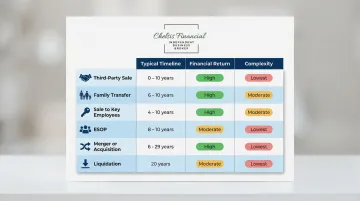
Six primary exit routes exist, each suited to different financial goals, timelines, and relationship priorities. The table below offers a quick comparison before diving into each option.
| Exit Strategy | Typical Timeline | Financial Return | Complexity |
|---|---|---|---|
| Third-Party Sale | 6–12 months | Highest | High |
| Family Transfer | 1–3 years | Moderate | High |
| Sale to Key Employees | 1–2 years | Moderate | Medium |
| ESOP | 18–24+ months | Good (tax-advantaged) | Very High |
| Merger or Acquisition | 6–18 months | High | High |
| Liquidation | 3–6 months | Lowest | Low |
Third-Party Sale (External Buyer)
Selling to an outside individual, competitor, or private equity firm typically yields the highest financial return and the cleanest exit. This strategy requires thorough valuation, buyer vetting, and often takes 6–12 months to complete. For owners who want a full exit with maximum liquidity, it's the most common path.
Transfer to Family Member
Keeping a business legacy within the family appeals to many owners, but significant challenges exist. Family members often lack capital to purchase at fair market value, requiring seller financing. According to the Family Business Institute, only about 30% of family businesses survive the first ownership transition — most fail due to inadequate preparation or unresolved family conflict.
Sale to Key Employees
This option preserves company culture and rewards loyal staff. Common funding structures include installment sales or leveraged management buyouts. The primary risk is that employees may lack both the capital and business acumen needed to take full ownership, potentially jeopardizing the transition.
Employee Stock Ownership Plan (ESOP)
An ESOP is a tax-qualified plan that transfers ownership to employees through a trust. It offers significant tax advantages but takes 18–24 months to establish — meaning this option only works if you start well before you're ready to leave.
Merger or Acquisition
A merger or acquisition makes sense when your business holds something a larger company wants — unique territory, proprietary technology, customer relationships, or recurring revenue. It depends heavily on industry conditions and timing.
Liquidation
Liquidation is the last-resort option: selling off assets, collecting receivables, and paying liabilities. It returns the least value because buyers know the owner is winding down and negotiate accordingly. Every other strategy on this list exists to avoid arriving here.
How the Business Exit Planning Process Works
Exit planning is a multi-year process — typically spanning 5–7 years — that moves from self-assessment through valuation, preparation, and finally a tax-efficient ownership transfer. The earlier you start, the more options you have.
Step 1: Define Your Exit Goals
The first step is answering three foundational questions:
- When do I want to exit?
- To whom do I want to transfer the business?
- For what price?
Your answers drive every subsequent decision. Without clarity on timing, buyer type, and financial target, you cannot build an effective plan.
Step 2: Get a Professional Business Valuation
Understanding what your business is currently worth—and what it needs to be worth—is the foundation of the entire plan. Valuation examines financial performance, EBITDA, growth potential, customer concentration, recurring revenue, and management depth.
According to Exit Planning Institute research, 70% of business owners need to harvest the value of their business to support their post-exit lifestyle. Yet many have never had a formal valuation, leading to unrealistic expectations.
Chelsis Financial offers a Complimentary Assessment of Value as a starting point for owners who want to understand where they stand before committing to a full plan.
Step 3: Assemble Your Advisory Team
Exit planning requires a coordinated team:
- A financial advisor to manage wealth transition and retirement income planning
- An attorney to handle deal structure and legal documentation
- An accountant or tax strategist to minimize your tax exposure at closing
- A business broker or exit planning consultant to vet buyers and manage the sale
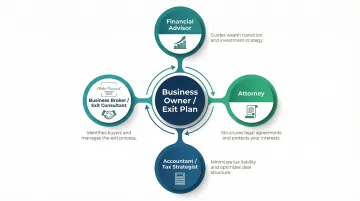
Each role addresses a distinct piece of the transition. Gaps in this team — particularly on the tax or legal side — are where exits most often lose value.
Step 4: Build Business Value and Close the Asset Gap
The "asset gap" is the difference between current business value and what you need to retire comfortably. Closing this gap requires strengthening the factors buyers scrutinize most:
- Clean, audited financials that hold up under due diligence
- Predictable, recurring revenue that reduces perceived buyer risk
- A management team capable of running operations without you
- A diversified customer base with no single client exceeding 15–20% of revenue
- Documented systems and processes that transfer cleanly to new ownership
Step 5: Execute the Transition
Once the value gap is closed and the business is positioned for sale, the execution phase begins:
- Selecting and qualifying buyers
- Negotiating terms
- Completing due diligence
- Structuring the deal for tax efficiency
- Communicating the transition to employees, customers, and stakeholders
Confidentiality is critical throughout—particularly when listing the business and vetting buyers. Premature disclosure can unsettle employees, alarm customers, and weaken negotiating leverage.
Key Factors That Determine Your Exit Outcome
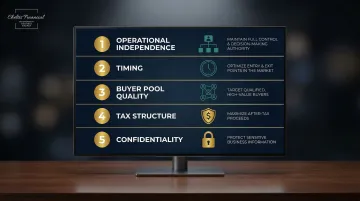
Five variables, more than anything else, determine what your business sells for and how cleanly the deal closes:
Operational Independence – If the business cannot run without you, its value drops sharply. Buyers pay a premium for companies with established management teams and documented systems.
Timing – Market conditions, industry trends, and personal readiness all affect what the business will sell for and how long the process takes. Exiting during a period of strong revenue growth typically yields a higher multiple.
Buyer Pool Quality – The number and quality of buyers available directly shapes price and deal terms. Chelsis Financial's vetted buyer registry gives sellers access to pre-qualified acquirers, which strengthens negotiating position from the start.
Tax Structure – Deal structure (asset vs. stock sale) and entity type (C-Corp vs. S-Corp) can shift your net proceeds by hundreds of thousands of dollars. Tax planning needs to start years before the sale, not during negotiations.
Confidentiality – Premature disclosure can unsettle employees, alarm customers, and hand leverage to the buyer. Maintaining discretion throughout the process protects both deal value and business stability.
Common Exit Planning Mistakes to Avoid
Waiting Too Long to Start
Most owners begin thinking about exit planning only when they're ready to leave. At that point, they've lost years of value-building opportunity and may be forced to accept less favorable terms or a limited buyer pool. Early planning creates options and maximizes value.
Overestimating Business Value
Emotional attachment often leads owners to price their business based on what they need in retirement rather than what the market will bear. Research from Exit Planning Institute shows that while 75% of owners stated they have determined how much they need to net after taxes, nearly 40% have not had their plans reviewed by a financial advisor. A professional valuation grounded in comparable sales and normalized financials is essential.
Neglecting the Personal Side of Exit Planning
A solid financial valuation is only half the equation. Many owners underestimate the psychological challenge of letting go and fail to plan for what comes next. Without a post-exit plan, the transition can feel directionless even when the sale goes well. At minimum, that plan should address:
- Income replacement: How will you cover living expenses once business cash flow stops?
- Estate planning coordination: Does your exit align with your broader estate and tax strategy?
- Identity and purpose: What does life look like after the business you built?
Frequently Asked Questions
What should an exit plan include?
A complete exit plan covers several interconnected components:
- Your timeline and financial goals
- A professional business valuation
- Your chosen transfer strategy
- Tax planning and legal documentation (including buy-sell agreements)
- A transition communications plan
- Coordination with estate planning
What are the different types of exit strategies?
The six main options are third-party sale, family transfer, key employee sale, ESOP, merger or acquisition, and liquidation. The right choice depends on financial goals, your desired involvement post-sale, and the business's buyer readiness.
What is the best way to exit a service business as an owner?
Service businesses are often heavily dependent on the owner's relationships, so the best exit strategy involves building a strong management team, systematizing service delivery, and ideally transitioning to a buyer who can maintain client relationships. A third-party sale or key employee transfer tends to work well in this context.
How early should I start exit planning?
Most advisors recommend starting 5–7 years before your intended exit date. This allows time to build business value, close any asset gap, implement tax strategies, and approach the market from a position of strength rather than urgency.
How is my business valued for a sale?
Business valuation considers financial performance (often using EBITDA), growth potential, recurring revenue, customer concentration, management depth, and comparable sales in the industry. A professional valuation normalizes these figures to reflect true market value.
Do I need a business broker to sell my business?
While not legally required, a business broker brings a vetted buyer network, confidentiality management, deal structuring expertise, and negotiation support that typically results in a higher sale price and a smoother process than selling independently.
Ready to understand what your business is worth? Chelsis Financial offers a Complimentary Assessment of Value to help you determine where you stand and what steps to take next. Contact us at 866-842-5151 to schedule a confidential consultation.