
Introduction
Every year, thousands of business owners face one of the most consequential decisions of their careers: selling the company they've spent decades building. Whether driven by retirement, health concerns, partnership disputes, or strategic opportunities, these transitions represent once-in-a-lifetime events for most entrepreneurs.
Yet despite the high stakes, most business owners enter the M&A process blind. Research shows that 90% of lower middle market sellers are first-time sellers, and 80% lack a formal exit plan. The result? Roughly 31% of business sale engagements terminate without closing, often leaving owners with nothing but wasted time and missed opportunities.
Most owners know they need help — but they don't know what that help actually looks like. This guide breaks down what M&A advisors do day-to-day, how they create value, and what separates a strong advisor from a mediocre one.
Key Takeaways
- M&A advisors guide businesses through buying, selling, or merging—handling valuation, deal structuring, negotiation, and closing
- Their core value lies in maximizing deal outcomes while managing complexity, risk, and confidentiality
- The process moves through five distinct stages, from initial valuation and market preparation through due diligence, negotiation, and closing
- Engaging an M&A advisor 12–18 months before a planned sale significantly improves both valuation and deal readiness
- Professionally advised sellers achieve 20–30% higher multiples than unrepresented sellers
What Is an M&A Advisor?
An M&A advisor is a professional or firm that guides businesses through the process of buying, selling, or merging with another entity. They structure deals that work for both parties, bringing expertise, buyer networks, and negotiation leverage that most business owners simply cannot replicate on their own.
The Advisor Spectrum: Understanding the Differences
Not all M&A advisors are created equal. The industry spans a wide spectrum, and understanding where your business fits is critical to choosing the right representation.
| Advisor Type | Deal Size | Typical Buyers |
|---|---|---|
| Business Brokers | Under $2M | Individual buyers replacing a salary |
| M&A Advisors | $2M–$50M | Institutional buyers, private equity |
| Investment Banks | $50M+ | Corporations, PE firms, public markets |
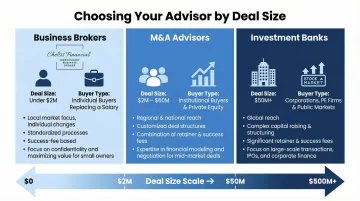
For most Midwest businesses generating $300,000 to $11 million+ in annual revenue, M&A advisors are the right fit—offering the sophistication needed for complex transactions without the overhead of bulge-bracket investment banks.
Why M&A Advisors Exist
Most business owners complete a sale once in their lifetime. An experienced M&A advisor has managed dozens of transactions, bringing pattern recognition, buyer networks, and negotiation leverage that an unrepresented seller cannot match.
The advisor's role is to level the playing field. Buyers—especially private equity firms and serial acquirers—execute acquisitions repeatedly. They know how to structure offers, identify weaknesses during due diligence, and renegotiate terms to their advantage. Without professional representation, sellers are at a severe disadvantage.
Chelsis Financial works with Midwest business owners in this exact range—handling confidential sales from valuation through closing. For owners who aren't sure where to start, the firm offers a Complimentary Assessment of Value so sellers enter the market with a clear, defensible number in hand.
What Does an M&A Advisor Actually Do?
M&A advisors manage a complex, multi-stage process designed to maximize value while protecting the seller's interests. Here's what they do behind the scenes.
Valuation and Business Assessment
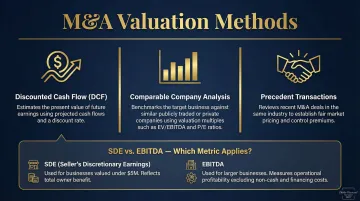
One of the first—and most critical—tasks an M&A advisor performs is determining what the business is actually worth. This isn't guesswork; it's a rigorous analysis using methods like:
- Discounted Cash Flow (DCF): Estimates the present value of expected future cash flows
- Comparable Company Analysis: Benchmarks the target against similar businesses using valuation multiples
- Precedent Transactions: Reviews recent M&A deals involving similar companies to establish market pricing
For businesses under $5 million, advisors typically use Seller's Discretionary Earnings (SDE), which adds back owner salary and discretionary expenses. For larger businesses, EBITDA (Earnings Before Interest, Taxes, Depreciation, and Amortization) is the standard metric, as institutional buyers expect to hire professional management.
Beyond calculating a number, advisors identify factors that suppress or inflate value—such as customer concentration, owner dependency, or undocumented revenue streams—and help address these issues before going to market.
Buyer Identification and Market Positioning
Finding the right buyer matters as much as finding any buyer. Advisors use proprietary databases, industry networks, and targeted outreach to identify candidates who match what the seller actually needs:
- Price expectations and payment terms
- Confidentiality requirements throughout the process
- Continuity of staff and cultural fit with the existing team
That network reach matters enormously in practice. Chelsis Financial, for example, maintains connections with over 2,000 businesses across Indiana and the Midwest, enabling them to match sellers with serious, financially qualified buyers quickly and discreetly.
Due Diligence Coordination
Due diligence is where many deals fall apart. Advisors manage this complex process by organizing financial records, legal documents, and operational data so the business holds up to scrutiny.
They also catch and address red flags before they become deal-breakers. According to Axial's 2025 Dead Deal Report, 25.3% of post-LOI deal failures stem from non-financial diligence findings like customer concentration and legal risks—issues a skilled advisor anticipates and mitigates early.
Negotiation and Deal Structuring
Professional representation at the negotiating table is often where sellers recoup the advisor's fee—and then some. Advisors advocate for their client's interests in negotiating:
- Purchase price
- Payment structure (cash upfront, earnouts, seller financing)
- Representations and warranties
- Indemnification terms
- Post-sale obligations
Research consistently shows that professionally advised sellers achieve 20–30% higher multiples than unrepresented sellers. Advisors know how to generate competitive tension between buyers, structure offers favorably, and push back on tactics designed to chip away at the price.
Regulatory Compliance and Closing Support
Advisors ensure all legal and regulatory requirements are met throughout the transaction. Working alongside attorneys and accountants, they coordinate the final stages of the deal:
- Drafting and reviewing purchase agreements
- Managing escrow arrangements
- Overseeing transition planning so both parties fulfill agreed obligations
How the M&A Advisory Process Works
While every deal is unique, M&A advisory engagements follow a defined sequence of stages. Understanding this sequence helps business owners set realistic expectations and stay ahead of each milestone.
Engagement and Initial Valuation
The process begins when the client engages the advisor, shares financial and operational information, and receives a formal business valuation. This foundation also reveals gaps that could reduce value before the business goes to market.
At Chelsis Financial, this stage starts with a brief consultation to discuss the business and understand the owner's goals. The firm's Complimentary Assessment of Value provides owners with a defensible valuation based on financial performance, market trends, and industry benchmarks, helping them determine whether the timing is right to sell.
Preparing the Business for Market
Advisors prepare marketing materials, often called a Confidential Information Memorandum (CIM), that present the business to potential buyers. The CIM is typically a 50+ page document covering the company's history, financials, competitive advantages, and growth opportunities.
Confidentiality shapes every step of this stage:
- Outreach is managed so the sale doesn't surface to employees, customers, or competitors
- Anonymous teasers gauge buyer interest before any sensitive details are shared
- Signed Non-Disclosure Agreements (NDAs) are required before releasing the full CIM
Due Diligence and Buyer Qualification
During due diligence, buyers scrutinize the seller's financials and operations. The advisor's job is to ensure the seller is organized, responsive, and credible, and that only serious, qualified buyers gain access to sensitive information.
Key advisor responsibilities during this phase include:
- Coordinating the Virtual Data Room (VDR) where documents are stored securely
- Managing buyer requests to prevent diligence fatigue on the seller's team
- Preparing sellers for Quality of Earnings (QoE) reports, third-party audits that verify financial performance
That preparation pays off. Sellers who commission a sell-side QoE report achieve higher multiples: 7.4x EBITDA on average versus 7.0x for those who don't.
Negotiation and Deal Structuring
Advisors lead negotiations on price and terms, explaining common deal structures and their implications:
- Asset Sale vs. Stock Sale: Asset sales allow buyers to avoid inheriting liabilities; stock sales are often more tax-efficient for sellers
- Earnouts: Tie a portion of the purchase price to future performance — useful when buyers and sellers disagree on valuation
- Seller Notes: Seller financing where the buyer pays a portion of the purchase price over time
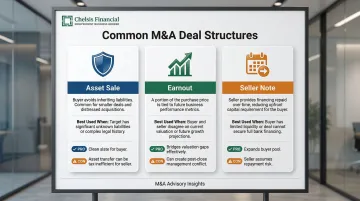
Advisors ensure sellers understand exactly what they're agreeing to and negotiate terms that protect their net proceeds and post-sale obligations.
Closing and Transition
The closing process involves finalizing purchase agreements, coordinating with legal and financial professionals, andwhere applicable, supporting the transition period so ownership handoff is smooth.
From Letter of Intent (LOI) to closing, the process typically takes three to six months. Advisors keep deals on track by maintaining momentum, facilitating weekly check-ins, and ensuring both parties fulfill their obligations. As Chelsis Financial emphasizes, "time kills deals": maintaining responsiveness and operational consistency is critical during this demanding period.
Key Benefits of Hiring an M&A Advisor
Higher Deal Value
Research consistently shows that represented sellers achieve better outcomes than unrepresented ones. A study analyzing 4,468 private company transactions found that sellers who used an M&A advisor achieved a valuation premium of approximately 25% compared to those who sold independently.
Three factors drive that premium:
- Pricing leverage: Advisors know market benchmarks and push for competitive pricing
- Buyer competition: Advisors create auction environments; 80% of marketed deals over $5 million attract three or more competing offers
- Structured negotiation: Advisors prevent buyers from retrading offers downward during due diligence
Confidentiality and Discretion
A well-run sale process keeps the transaction invisible until the time is right. Employees, customers, and competitors don't need to know the business is for sale—protecting both business continuity and negotiating leverage.
Advisors manage this through phased information sharing, anonymous teasers, and secure data rooms. Without those controls, leaks can:
- Damage employee morale and trigger turnover
- Spook key customers into seeking alternatives
- Alert competitors to strategic vulnerabilities
Time Savings and Reduced Distraction
Managing an M&A process while running a business leads to poor outcomes on both fronts. Buyers scrutinize recent financial trends closely—if revenue or profitability dips during the sale, they'll demand price reductions or walk away entirely. Advisors absorb the transaction workload so owners can stay focused on what actually protects the valuation: keeping the business performing.
When Is the Right Time to Hire an M&A Advisor?
Pre-Sale Preparation (12–18 Months Out)
The best time to engage an advisor is well before a planned sale—ideally 12 to 24 months in advance. This runway allows the advisor to:
- Normalize financials and eliminate red flags
- Address weaknesses that suppress value (customer concentration, owner dependency)
- Time the market to maximize valuation
- Build a strong management team to reduce buyer risk
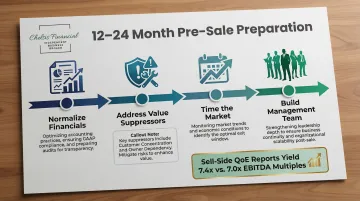
Sellers who commission a sell-side Quality of Earnings report before going to market achieve higher multiples and close faster—because they've addressed diligence concerns proactively.
Reactive Triggers (Retirement, Health, Partnership Disputes, Unsolicited Offers)
Not every exit is planned. Owners frequently reach out to advisors when:
- Retirement or a health event requires a faster-than-expected exit
- Partnership disputes require a buyout or full business sale
- An unsolicited offer arrives from a private equity firm or strategic buyer
That last scenario carries real risk without representation. Over 80% of unsolicited offers are materially revised downward during due diligence when the seller has no advisor. With one, buyers face competitive tension—and are far less likely to walk back their opening number.
Acquisition Planning
Timing matters on the buy side too. Advisors work with acquirers well before a deal closes to make sure the right target is chosen—not just the most available one. Buy-side advisors help:
- Identify the right targets that align with strategic goals
- Avoid overpaying by conducting independent valuations
- Structure deals around specific operational or market gains, not just deal volume
- Navigate due diligence to uncover hidden risks
Frequently Asked Questions
What do mergers and acquisitions advisory services do for companies?
M&A advisory services guide companies through the full transaction process—from valuation and buyer/seller identification to negotiation, due diligence, and closing. They act as strategic partners who maximize deal value and manage complexity on the client's behalf.
What is the difference between an M&A advisor and a business broker?
While both facilitate business transactions, M&A advisors typically serve mid-to-large market deals with more complex structuring, while business brokers focus on small-to-mid market transactions. The distinction matters primarily in terms of deal size and service scope.
How much does an M&A advisor typically charge?
Most M&A advisors work on a success-fee basis—a percentage of the final deal value, commonly structured using a Lehman formula or retainer-plus-success-fee model. For deals under $10 million, flat success fees of 6% to 11% are common, while larger deals use tiered structures that reduce the percentage as deal value increases.
How long does the M&A advisory process take?
Most M&A transactions take seven to ten months from engagement to closing, though timelines vary significantly based on deal complexity, buyer availability, and how well-prepared the seller is before going to market. The due diligence period alone typically takes three to four months.
Can a small business owner benefit from M&A advisory services?
Yes—small business owners benefit significantly from advisory services, especially for maximizing valuation, maintaining confidentiality, and navigating negotiations where they'd otherwise be at a disadvantage against experienced buyers. Research shows that even smaller transactions achieve substantially higher multiples when professionally represented.
What should I look for when choosing an M&A advisor?
Key criteria include industry experience, track record of completed transactions, quality of their buyer network, transparency about fees, and their approach to confidentiality. Prioritize advisors who clearly advocate for your goals—not just the deal getting done.
Ready to understand what your business is worth? Chelsis Financial offers a Complimentary Assessment of Value to help business owners gain clarity before entering the market. Contact the team at 866-842-5151 to schedule a confidential consultation and take the first step toward a successful exit.